Why Visa and Mastercard Fees Matter More Than You Think
Most shoppers never see Visa and Mastercard fees, but those hidden costs raise prices for everyone
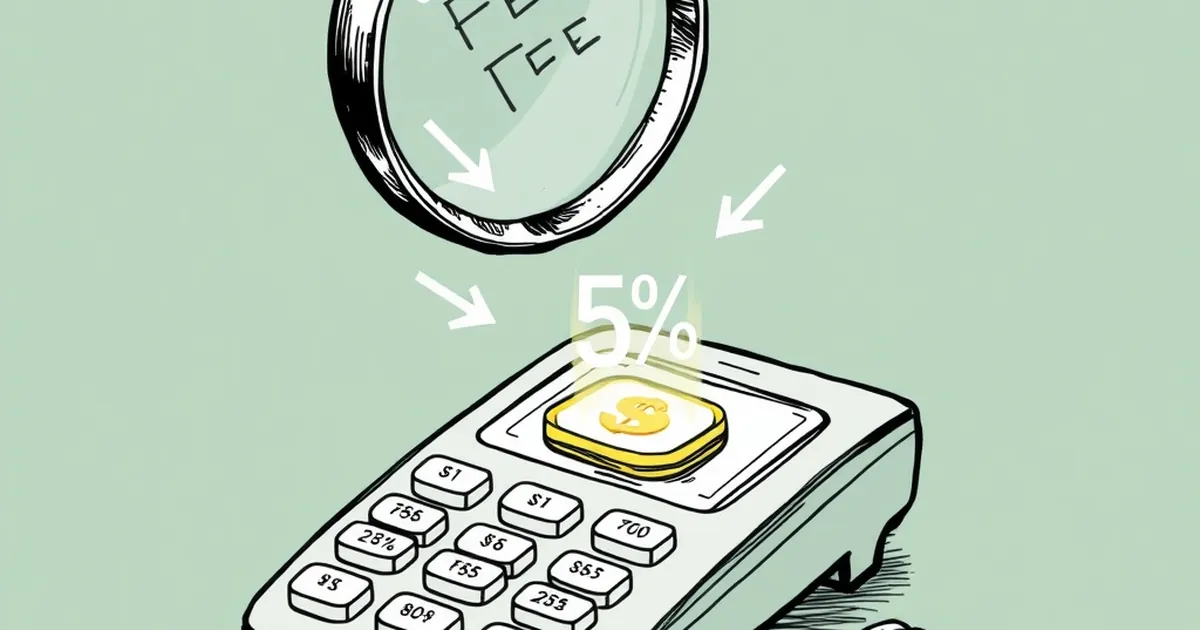
You swipe your card, tap your phone, or click "buy now" — and somewhere in that split second, a hidden economy kicks into gear. Visa and Mastercard process trillions of dollars in transactions every year, and for every single one, a fee is paid. But here’s the question most people never ask: where does that money go, and who really pays for it?
The answer is you. And the impact is much bigger than you think.
The Invisible Tax on Every Transaction
Every time you pay with a card, the merchant loses a small percentage of that sale to what’s called an interchange fee. This fee is set by Visa or Mastercard, collected by the issuing bank, and passed through a chain of intermediaries. To the consumer, it’s invisible. You never see a line item on your receipt that says “card fee: $0.45.”
But merchants see it. And they hate it.
For small businesses, these fees can eat up 2% to 3% of every transaction. That might not sound like much on a $5 coffee, but when you’re running a bakery with thin margins, it’s the difference between profit and loss. A restaurant owner I know once told me that his Visa and Mastercard fees cost him more than his rent. That’s a stunning reality check.
Who Sets These Fees?
Visa and Mastercard are not banks. They are network associations that set the rules and the pricing structure for card transactions. They don’t lend money or hold deposits. But they decide what banks can charge each other when a card is used. This is a massive concentration of power.
The fees are not uniform. They vary by card type, transaction method, and even geography. A premium rewards card with a high credit limit carries a higher interchange fee than a basic debit card. That’s why merchants sometimes refuse Amex — it’s historically more expensive. But Visa and Mastercard dominate so completely that refusing them is almost impossible for any serious business.
Why This Matters for Consumers
You might think, “I don’t pay those fees, so why should I care?” That’s exactly the point — you do pay them, just indirectly. Merchants don’t absorb these costs. They pass them on to you in the form of higher prices.
Every time you buy a loaf of bread, a plane ticket, or a pair of shoes, a hidden surcharge is baked into the price. Economists call this a regressive tax — it hits lower-income households hardest because they spend a larger share of their income on goods. The wealthy get rewards points and cashback funded by those same fees. It’s a system where the poor effectively subsidize the perks of the rich.
The Rewards Game
Those airline miles and hotel points you love? They’re not free. Banks pay for them by charging higher interchange fees on premium cards. Visa and Mastercard enable this by offering different fee tiers. The result is a two-tiered payment system where cash and debit users — often less affluent — cross-subsidize the rewards of credit card users.
This isn’t a conspiracy. It’s just how the math works. The next time someone brags about their “free” flight, remember that everyone else paid for it.
The Merchant Perspective: A Squeeze from Both Sides
Merchants are caught in a bind. They can’t refuse Visa or Mastercard without losing customers. But accepting them means giving up a chunk of every sale. For large retailers like Walmart or Amazon, this amounts to billions of dollars annually. They have the power to negotiate lower rates, but small businesses don’t.
In many countries, merchants are legally allowed to add a surcharge for card payments. But in practice, few do — because customers hate it. So instead, they raise prices across the board. Everyone pays more, whether they use cash or cards.
A Concrete Example
Let’s say you run a small bookstore in London. A customer buys a £20 book with a Visa credit card. The interchange fee might be 1.5%, plus a small fixed fee. That’s £0.30 gone. On a good day with 100 transactions, that’s £30 in fees. Over a year, it’s thousands of pounds — money that could have paid for a part-time employee or lower book prices. Multiply that across millions of small businesses globally, and you see the scale of the problem.
Regulation Around the World
Governments have noticed. In the European Union, interchange fees for consumer credit cards are capped at 0.3% of the transaction value. In Australia, similar caps exist. These regulations have saved merchants and consumers billions. But in the United States, regulation is weaker, and fees remain higher.
Visa and Mastercard argue that high fees fund innovation and security. They point to fraud protection, chargeback systems, and contactless technology. And they’re not wrong — those things matter. But the question is whether the current fee structure is fair or excessive.
The Litigation Landscape
Class-action lawsuits have been filed against both networks for decades. In 2023, a major settlement in the U.S. proposed caps on swipe fees for merchants. But the networks fought back, and the outcome is still uncertain. Meanwhile, new players like fintechs and stablecoins are trying to bypass the traditional card rails entirely. The pressure is building.
The Future: What Changes Are Coming?
The payment industry is not standing still. Central bank digital currencies (CBDCs) and real-time payment systems like India’s UPI or Brazil’s Pix are challenging the Visa-Mastercard duopoly. These systems often have near-zero transaction costs. If they gain global traction, the days of 2% interchange fees may be numbered.
But don’t expect a quick collapse. Visa and Mastercard are deeply embedded in the global financial infrastructure. They have relationships with thousands of banks, millions of merchants, and decades of trust. Change will come slowly, and it will come through regulation and competition, not revolution.
What You Can Do
As a consumer, you have more power than you realize. Choose debit over credit when possible — debit fees are usually lower. Support businesses that offer discounts for cash payments. And ask your bank or credit union about their fee structures. The more you understand the system, the better you can navigate it.
For business owners, the advice is simple: audit your payment processing costs regularly. Negotiate with your processor. Explore alternative payment methods like direct bank transfers or digital wallets that charge lower fees. Every basis point counts.
A Practical Takeaway
The next time you tap your phone to pay for a coffee, pause for a second. That simple gesture triggers a complex financial chain that costs someone real money. The system works because it’s invisible. But once you see it, you can’t unsee it.
The real question isn’t whether Visa and Mastercard fees are too high. It’s whether we, as consumers and business owners, will demand a fairer system — or keep paying the invisible tax without a second thought. The choice is ours. And the moment to start paying attention is now.