Why card networks restrict gambling sites, and who eats the fee
Card networks restrict gambling sites to shift chargeback losses down the chain, and the resulting fee often reaches players as cash advance charges
5 min read
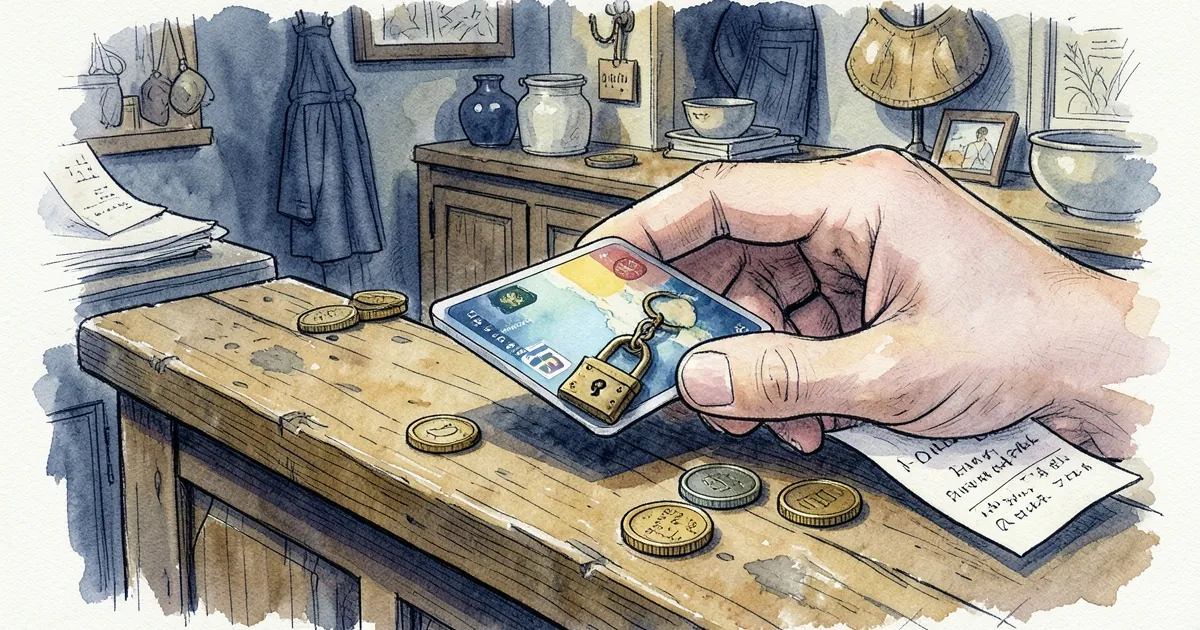
The restriction is not really about gambling being illegal — in most of the markets where these cards work, it isn't. It's about who carries the loss when a bet goes wrong, and the card networks have spent two decades deciding that the answer should be the merchant, the acquirer, or the player, but almost never them. The fee gets passed down that chain, and by the time it reaches you it usually shows up as a cash advance charge, a declined deposit, or a bonus term that quietly absorbs the cost.
The chargeback problem, in one number
Card networks are dispute-resolution systems that happen to move money. Their economics run on interchange, and their risk runs on chargebacks — a cardholder calling the issuer and saying "I didn't authorise that" or "the goods never arrived." Gambling generates a disproportionate share of both, because a losing bet is a purchase the buyer regrets, and regret is the raw material of a chargeback.
That's the root of it. A grocery purchase that goes wrong produces a complaint about a delivery. A £200 losing accumulator produces a customer who genuinely believes the site cheated, and the issuer has to adjudicate with no way to verify what happened on the operator's screen. Multiply that across millions of transactions and the networks conclude the category is more trouble than the interchange is worth. Hence the merchant category codes — 7995 for betting, 7800 for government lotteries, 7801 for internet gambling, 7802 for licensed horse and dog racing — which exist so that gambling can be tracked, blocked, monitored, or surcharged separately from everything else on your statement.
Mastercard's rulebook makes the mechanism explicit. In the US region, an acquirer can only tag a transaction as 7801 or 7802 if it has first registered the merchant with Mastercard. No registration, no legal-gambling code. That single sentence explains why so many operators route through a handful of specialist processors rather than their own bank.
What issuers actually do with your deposit
Here's the part most players discover at the worst possible moment. According to the Consumer Financial Protection Bureau, which reviewed card agreements from seven top US issuers in December 2024, every one of them classifies online gambling or legal wagers as a cash advance. Two hedge with "may decline" language for internet gambling, but the default treatment is cash advance, not purchase.
That matters because cash advance terms are punitive by design:
- The APR. The most common cash advance rate in those reviewed agreements is 30%, and it applies from the day of the transaction — no interest-free grace period, even for cardholders who clear their purchase balance in full every month.
- The fee. Cash advance fees often carry a minimum charge of $10. Deposit $30 and the fee can be a third of the stake before you've seen a card.
- The reporting. Cash advances can affect how the balance is treated for scoring purposes, which is a slower burn than the fee but a real one.
This is the fee the title asks about, and it lands on the player first. The CFPB noted that sports betting is legal in 38 states and that nearly $120 billion was wagered online in the prior year — a volume of transactions flowing through a rail that was never designed to treat them as ordinary purchases.
If you've ever wondered why a small deposit stings more than the amount suggests, there's a behavioural layer to it too: loss aversion flips at $20, and a $10 minimum fee on a $30 deposit reads as theft rather than pricing.
Who eats what, market by market
The networks don't apply one global rule, and the differences are instructive.
Europe. In May 2025 Mastercard removed all gaming and gambling MCCs from the requirement to process as Account Funding Transactions, letting them continue as ordinary purchase transactions. AFT processing is the stricter, more expensive rail — it's how the network keeps gambling money separate from purchase money. Dropping that requirement in Europe shifts cost off merchants and, indirectly, off players.
The US. AFT processing is still mandatory. Same network, same merchants, different cost of doing business depending on which side of the Atlantic the transaction originates.
APAC, MENA and the US. From 30 June 2025, Mastercard introduced a monitoring programme for gaming and gambling merchants under MCCs 7800, 7801, 7802, 7995 and 9406 based in those regions, with assessments — read: fines — for non-compliance. That's the network deciding it will police the category rather than simply exclude it, and charging for the policing.
So the answer to "who eats the fee" depends on the layer. The network charges the acquirer. The acquirer charges the merchant, usually as a percentage plus per-transaction uplift. The merchant recovers it through margin, through minimum deposit thresholds, or through wagering terms. And the player absorbs whatever survives that chain — which is why the one fee your card network never tells you about is often the one buried in the exchange rate rather than the one printed on the statement.
Why your card works until it doesn't
The monitoring regime explains a pattern players find maddening: a card that deposits fine for three weeks and then fails at 2:47 AM on a Saturday. Nothing changed about your account. What changed is the acquirer's rolling risk position, or a monitoring threshold, or the merchant's registration status under that Mastercard rule.
There's a genuine upside buried in this. Card declines at 2:47 AM teach faster than any help page — a blocked deposit is a hard stop that arrives before the money leaves, and unlike a self-exclusion form buried three menus deep, it doesn't ask you to be honest with yourself at the exact moment you're least inclined to be. Networks restricting gambling is, whatever its motives, one of the more effective friction points in the system. That's not a reason to design around it with e-wallets and crypto; it's a reason to notice when it fires.
The practical takeaway for readers is narrower than it sounds. If you're depositing by credit card into a sportsbook, assume cash advance treatment and check the minimum fee before you stake anything. If you're in Europe, the purchase-transaction treatment may still apply — for now. And if you're choosing between operators, withdrawal speed ranks above bonus size for 6 in 10 players, which suggests the market has already priced in how much payment friction is worth tolerating.
The open question
The networks have spent years treating gambling as a category to be monitored, surcharged, or excluded, and the cost of that posture has been distributed so thinly that no single party can see the whole bill. What happens when the monitoring regimes expand and the assessments bite — do operators absorb the uplift, do they push it into wagering requirements, or do they start refusing credit card deposits entirely and hand the rail to e-wallets that sit outside the MCC system altogether? If the last one happens, the networks will have succeeded in reducing their exposure while making the payments landscape less visible to everyone, including the regulators who asked for the restrictions in the first place. That's a strange place to end up.